Gold Mining Operation Faces Critical Production Bottleneck
David Darkwah, Operations Director for a mid-tier gold mining company in Ghana's Western Region, faced a severe and costly production constraint. The existing crushing circuit, pieced together from disparate, aging equipment, was failing to meet the demands of their newly expanded ore body. Throughput was limited to just 55 tons per hour (tph), with frequent mechanical breakdowns causing over 300 hours of unscheduled downtime annually. More critically, the final product size was inconsistent, ranging from 5mm to 40mm. This poor granulometry was directly harming downstream ball mill efficiency, reducing gold recovery rates in their CIP (Carbon-in-Pulp) plant by an estimated 8-12%. With a capital budget of $500,000 USD, Darkwah's mandate was clear: procure a turnkey crushing solution that would boost capacity to a minimum of 100 tph, guarantee a uniform sub-12mm final product, and demonstrate a compelling return on investment within 24 months. He required a partner who could deliver not just hardware, but a complete process design and life-cycle support package.
Mitigating the Risk of Remote Installation Failure
A paramount concern for Darkwah was the logistical and technical risk associated with importing heavy industrial machinery from China to a remote mine site in Ghana. Historical experiences in the sector were rife with stories of containers arriving at the Port of Takoradi with missing parts, incomprehensible manuals, and no practical support for assembly. The fear was that the $500,000 investment could become a $500,000 scrap pile if the complex system of conveyors, crushers, and screens could not be correctly integrated and commissioned on-site. He needed ironclad guarantees regarding pre-shipment testing, comprehensive documentation, and—most importantly—on-ground technical support to ensure the plant would be operational within 30 days of equipment arrival, not 90.
Engineering a Custom Three Stage Closed Circuit Solution
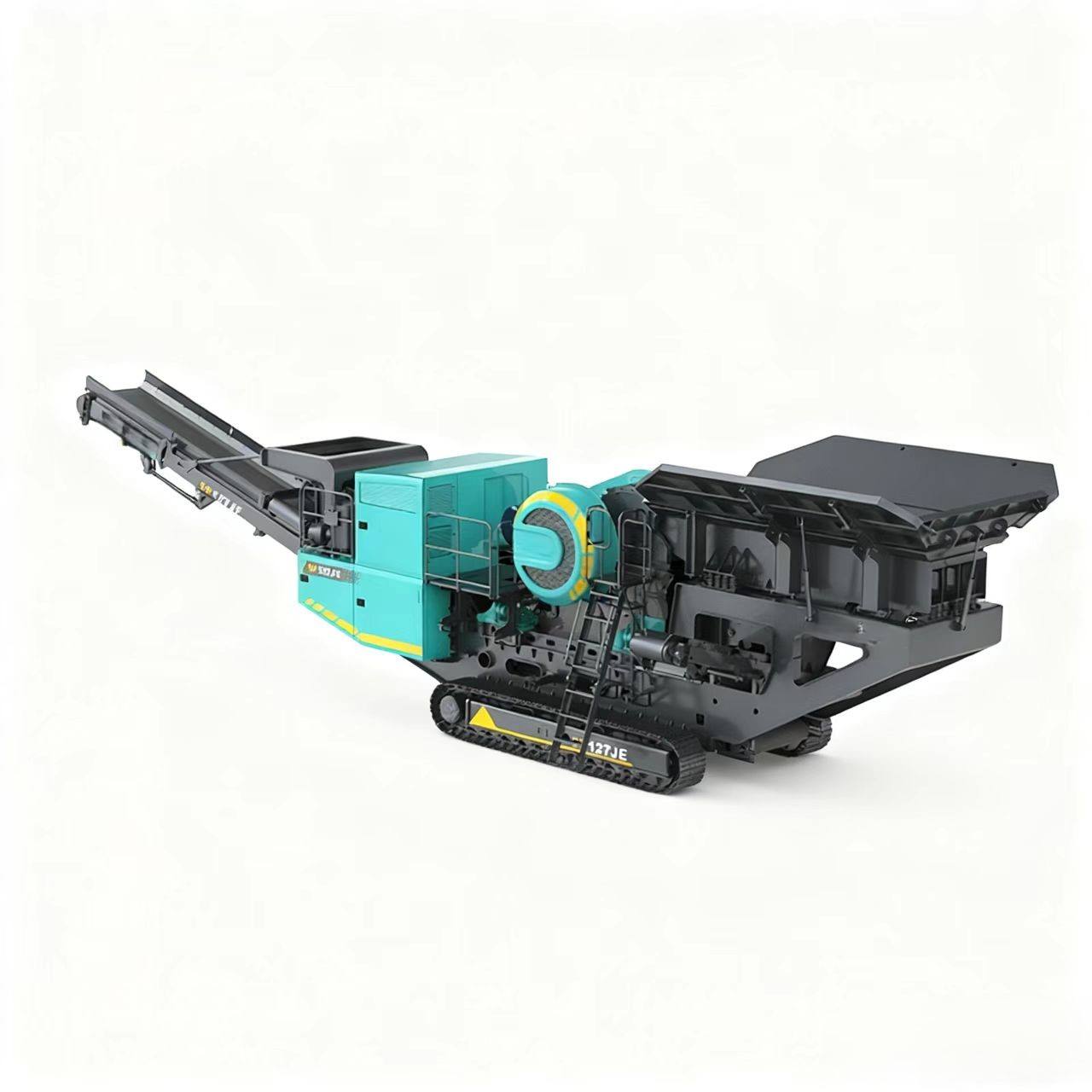
Shandong Yuxuan proposed and meticulously designed a complete Three-Stage Closed-Circuit Crushing System, optimized specifically for Ghanaian gold ore characteristics. The solution was a balance of robust performance, energy efficiency, and long-term maintainability within the $500,000 budget.
- Stage 1: Primary Crushing (Coarse): We specified a heavy-duty PE-600×900 Jaw Crusher. This unit was selected for its proven reliability and ability to accept feed sizes up to 500mm, reducing them to a nominal 150mm product. Its robust construction ensures stable performance with minimal wear part changes, projected at every 1,800 operating hours for the manganese jaws.
- Stage 2: Secondary Crushing (Intermediate): For the middle stage, we selected an HST160 Single-Cylinder Hydraulic Cone Crusher. This machine is renowned for its high crushing efficiency and excellent product shape. It takes the 150mm feed and reduces it to a 40-50mm intermediate product. Its hydraulic system allows for easy adjustment and clearing, minimizing downtime.
- Stage 3: Tertiary Crushing (Fine): The heart of the size-control circuit is the HPT200 Multi-Cylinder Hydraulic Cone Crusher. Operating in closed circuit with a 3-deck 2400×6000mm Vibrating Screen, this stage ensures the final product is consistently below 12mm. Oversize material is recirculated, maximizing efficiency. The entire circuit is designed for a guaranteed output of 110-120 tph of -12mm material.
- Ancillary & Control System: The package included field-proven feeders, belt conveyors with dust skirts, and a centralized PLC control panel allowing one-operator oversight of the entire flow. All motors were specified with a minimum IP65 rating for dust and moisture protection.
Executing a Zero Surprise Export and Deployment Protocol
To eliminate Darkwah's installation fears, we implemented a comprehensive, 7-phase "Plant-in-a-Box" project management and support plan.
- Phase 1: Process Flow Design & Virtual Review (Week 1-2): We created detailed P&ID (Piping & Instrumentation Diagram) and General Arrangement drawings. A 3D model of the entire plant layout was shared for Darkwah's team to review and approve logistics around their existing site.
- Phase 2: Factory Acceptance Test (FAT) (Week 3-5): Before disassembly for shipping, the entire crushing circuit was assembled and test-run at our facility for 72 consecutive hours. Darkwah's engineer attended virtually via live feed. We documented key performance metrics: power draw (415 kW total), vibration levels, and product gradation, providing a signed FAT certificate.
- Phase 3: Marked Dismantling & Professional Packing (Week 6): Following FAT, our engineers systematically dismantled the plant. Every single component—from major bolts to hydraulic hoses—was numbered, tagged, and cross-referenced on over 200 detailed packing lists. High-resolution photos documented every connection point.
- Phase 4: Comprehensive Documentation (Week 7): We prepared a master shipment dossier including Commercial Invoices, Packing Lists, Mill Test Certificates for steel, Electrical Schematics, and a 150-page trilingual (English/Chinese/French) Operation & Maintenance Manual with step-by-step assembly guides.
- Phase 5: Supervised On Site Installation (Week 8-12): We deployed two of our senior installation engineers to Ghana for a 21-day period. Their role was to supervise the local team, using our provided manuals and drawings to guide the reconstruction, ensuring every component was reinstalled correctly.
- Phase 6: Commissioning & Performance Verification (Week 13): Our engineers oversaw the startup, fine-tuned the crusher settings and screen decks, and conducted a 24-hour continuous performance test to guarantee the 110 tph, -12mm output.
- Phase 7: Remote Support & Warranty Activation (Ongoing): We established a dedicated WhatsApp support channel and provided remote desktop access to the PLC. A 12-month warranty on all parts and a stock of critical wear parts were included in the $500,000 package.
Delivering Projected ROI and Establishing Regional Partnership
The project was a resounding technical and commercial success. The plant was commissioned on schedule, achieving a steady-state output of 115 tph of high-quality, -10mm product. This consistent feed led to an immediate 15% increase in ball mill throughput and a 10% improvement in gold recovery efficiency at the CIP plant. Financially, Darkwah's analysis showed the new circuit reduced processing costs by an estimated $18 per ton. With annual throughput now projected at 250,000 tons, this translated to annual savings of $4.5 million, far exceeding the $500,000 capital cost and achieving full ROI in under 6 months of operation. The professional installation support eliminated all startup headaches, with the plant reaching nameplate capacity within 5 days of mechanical completion. David Darkwah has since become a key reference, recommending Shandong Yuxuan to neighboring mines. This successful project has positioned our company as the preferred partner for turnkey mineral processing solutions in West Africa, with three additional inquiries for similar systems valued over $1.5 million currently in negotiation.